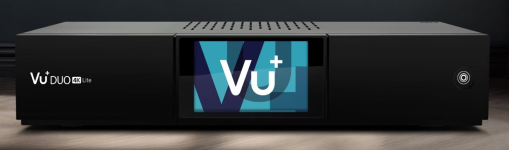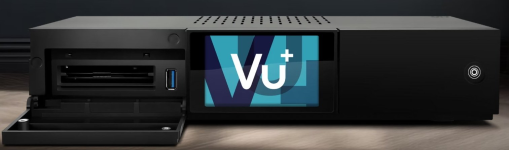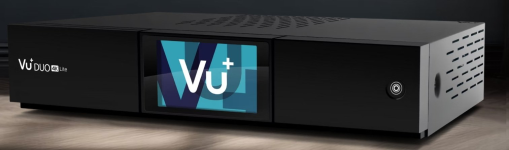

Vu+Duo 4K Lite

mosad

VIP


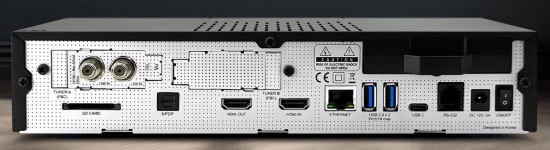
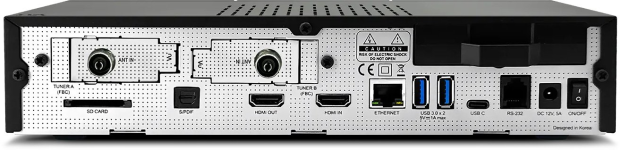
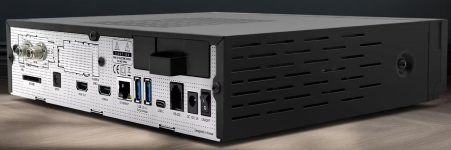
The VU+ Duo 4K Lite expands VU+'s already extensive product range with another device. The VU+ Duo Lite offers space for two plug-and-play Full Band Capture (FBC) tuners, enabling lightning-fast channel switching. The built-in tuner slots accommodate two FBC tuner modules (DVB-S2, DVB-C) or DVB-T2 dual tuner. Ample CPU resources, Gigabit LAN, dual-band Wi-Fi, Bluetooth, and USB 3.0 and USB-C ports open up entirely new possibilities for the future.


High-performance 4K reception with an FBC tuner for simultaneous recording and live TV, state-of-the-art HEVC decoding, and the future-proof Enigma2 Linux platform make the DUO 4K Lite the top choice for TV enthusiasts. Record directly, pause live TV, stream media on your network, and use CI modules for encrypted channels – all in an elegant, energy-efficient design. Reliable, flexible, and expandable – ideal for private enjoyment or sophisticated home entertainment setups.


What is a DVB-S2 FBC Twin Tuner?​


A DVB-S2 FBC twin tuner has 8 demodulators. With two conventional satellite feeds (e.g., a twin LNB), the tuner is comparable to 2 conventional tuners and 6 additional tuners operating in loop-through mode. This allows you to simultaneously watch, stream, or record channels from 8 different transponders across 2 different satellite bands. In SCR (Unicable) mode with 8 frequencies, this is equivalent to 8 conventional tuners.


What is a DVB-C FBC tuner?​


A DVB-C FBC tuner has 8 demodulators. This is equivalent to a receiver with 8 conventional DVB-C tuners. You can therefore watch, stream, or record 8 channels simultaneously.


What is a DVB-T2 dual tuner?​


A DVB-T2 dual tuner has two demodulators and allows simultaneous

Watch, stream or record 2 programs.

Key features​


  • Very fast switching times
  • WebKit Browser
  • Chromium OS
  • Transcoding
  • HbbTV
  • HDMI 2.0 output
  • HDMI 2.0 input
  • Gigabit LAN
  • Dual-band WiFi (2.4 / 5 GHz)
  • Simultaneous decryption of 2 CI modules
  • BT 5.4 for e.g. BT soundbars or headphones
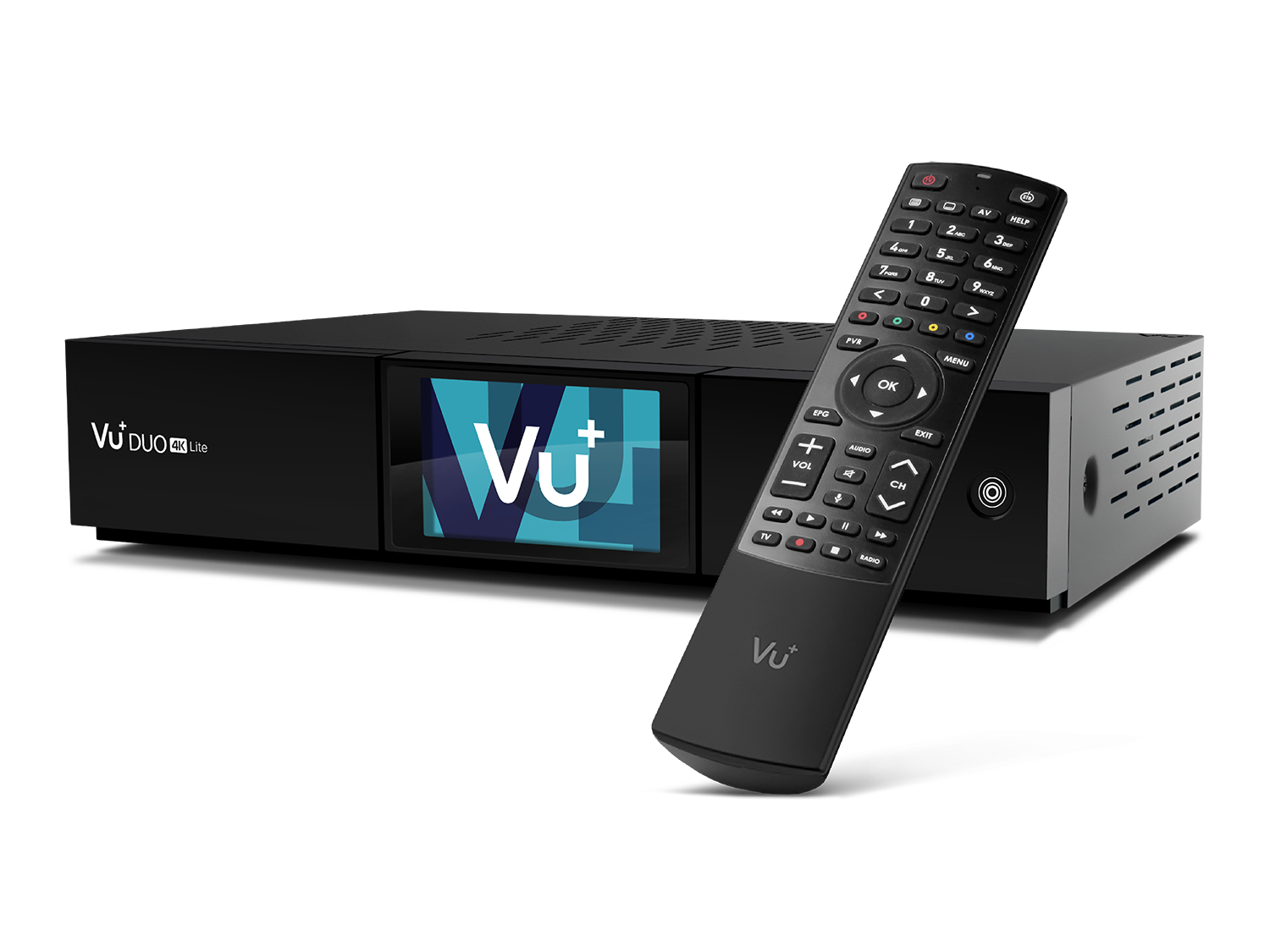
  • 3.0" TFT LCD Display - Mini TV
  • 2x tuner slots for e.g. DVB-S2X / DVB-C* Full Band Capture (FBC) or DVB-T2 Dual Tuner
  • 2 x USB 3.0
  • 1.7 GHz Dual Core CPU
  • eMMC flash memory
  • HEVC / H.265 video decoding
  • Plug & Play removable drive bays for 2.5" SATA hard drives (max. 15 mm HDD height)
  • External 12V power supply


Scope of delivery​


  • 1x VU+ Duo 4K lite with selected tuner configuration
  • 1x remote control
  • 1x Quick Manual (German / English)
  • 1x HDMI cable
  • 2x AA batteries
  • 1x power supply (110-240V / 12V)


IMG_0989.png
IMG_0990.png

IMG_0991.png
IMG_0992.png
IMG_0993.png
IMG_0995.png
IMG_0996.png
 
I can see the differences: the SE has a 1.5 GHz processor, whilst the Lite has a 1.7 GHz processor.
The 4GB(SE) model has 8GB(lite) of RAM, and the 3GB(SE) model has 2GB(Lite). Besides, the Lite has a smaller 3-inch display, whilst the SE has a 4-inch one.
I think I’ll stick with my SE after all ;)
 
The clue is in the name.

Lite means it's a stripped down / lower spec version, so with most things it won't be as good as the SE model.

So the Lite is 1.7GHz Dual core whilst the SE is 1.5GHz Quad core.

However things have moved on a little as the flash size is larger on the lite version (probably because these days 8gb flash chip is the same price or cheaper than 4gb would be, due to availability) and these days usb-c is common place, so it makes sense to add a usb-c port.

Think of it as a cross between the Uno4KSE and Duo4KSE,
 
Most importantly, the company has resumed producing devices again

Because after the COVID crisis, many rumors appeared claiming that the company had declared bankruptcy and shut down forever.
 
Most importantly, the company has resumed producing devices again

Because after the COVID crisis, many rumors appeared claiming that the company had declared bankruptcy and shut down forever.
It's not that a new model comes out, but that the new owner updates the software and drivers, which are many years old and were only supported by Vu+. If they do this, the other older models will also benefit, and we'll have decoders that are up-to-date.
It makes no sense for a new model to come out with years-old software, drivers, and kernel.
 
It's not that a new model comes out, but that the new owner updates the software and drivers, which are many years old and were only supported by Vu+. If they do this, the other older models will also benefit, and we'll have decoders that are up-to-date.
It makes no sense for a new model to come out with years-old software, drivers, and kernel.
I doubt any software or kernel updates will be supplied with this supposedly "New" receiver. It seems to be nothing more than an old receiver that is re-packaged as new. This means they will use the same ancient kernel they are using now. Perhaps I am wrong. We will see....

Plus this thread suggests to not even buy it: https://board.openbh.net/threads/vuplus-community.2671/
 
I doubt any software or kernel updates will be supplied with this supposedly "New" receiver. It seems to be nothing more than an old receiver that is re-packaged as new. This means they will use the same ancient kernel they are using now. Perhaps I am wrong. We will see....

Plus this thread suggests to not even buy it: https://board.openbh.net/threads/vuplus-community.2671/
That was 4+ years ago and it seems Vu+ have new owners now.
 
Exhaustive searches have been made with no evidence of VuPlus being sold or ownership changing.

Corporate structure:
Products are made by Ceru Co., Ltd., a South Korean company based in Seoul, which is a subsidiary of Marusys Co., Ltd.
Marketed and sold through CERU Trading Co.

Current status (April 2026): Still operating with no evidence of acquisition, merger, bankruptcy, or closure found anywhere. The main vuplus.com domain has an expired/broken SSL certificate, suggesting the primary site is being neglected.
The vuplus.de (European/German) site is active, hosted on Wix
Products are still sold through European retailers.
The VTi community support forum (vuplus-support.org) remains active.

Troubled relationship with the open-source community (since ~2022):

Vu+ stopped providing driver updates to third-party firmware teams.
Stopped communicating with developers entirely.
OpenPLi stated Vu+ "no longer updates their drivers" and has "no interest in replying."
The BlackHole firmware team essentially declared them dead to the community.
Some teams (VTi, OpenATV, PurE2) still build images for newer models, but with reservations.
Older models have been declared end-of-life by major firmware teams.

The BCM7252S (the most likely or probable chip) was announced by Broadcom in January 2015 — meaning the silicon is over a decade old. Meanwhile competitors have moved to modern ARM Cortex-A55/A73 chips running at 2.0+ GHz with Mali/Arm GPU cores.

Paying €339–419 for a dual-core 1.7 GHz chip from 2015 is a tough sell in 2026. But also in 2026, there is almost nothing else left to purchase, especially with FBC support.
 
To be honest, satellite TV and terrestrial TV are on their way out.
SKY UK is unlikely to invest in launching a new satellite after 2030, and terrestrial digital TV won’t have its licence renewed after 2034 – everything is moving towards streaming.
That’s why no one is investing in the production of new satellite boxes.
The era of satellite TV is more of a decline than a growth phase.
I don’t think anything new will emerge during this time, given that in 10 years’ time satellite TV as we know it will no longer exist, at least not with premium channels.
Times are changing.
 
Back
Top